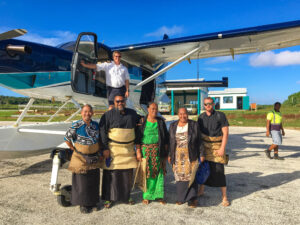


The foundation of everything that follows: your operation assessed on the ground, dock by dock and route by route.
The On-Site Operational Assessment is the second stage of a seaplane start-up, and the pivotal one. It is an extension of the Feasibility Study and can be contracted separately if you already have someone to write your business plan. Still, no credible business plan can be written without it, or without the experience needed to understand where the costs lie. The assessment serves as the basis for the Full Aviation Business Plan and the entry-to-service plan, and ultimately determines the civil aviation authority’s AOC approval.
The marketing environment
I assess the suitability of the seaplane markets themselves, including a review of the political, economic, social, technological, and environmental considerations that will shape the operation. Critically, this phase includes identifying potential end users to secure commitments and letters of intent, and to gather evidence of demand that investors and lenders will later request.
The operations environment
On the operational side, I assess the route structure, landing areas, annual weather challenges, and sea-state readiness at every potential destination. I conduct location scouting and evaluate potential seaplane landing and base locations, and when able, verify costs for developing water aerodromes and bases, and meet with local service providers and partners to cost out the infrastructure: docks, ramps, jetties, and hangars.
What the assessment covers
- Flight operations requirements — the type, number, and cost of aircraft, with flight and cabin crew standards, qualifications, and scheduling.
- Aircraft maintenance and engineering — base locations, routine and advanced maintenance, equipment costs and requirements, and crew standards, qualifications, and training.
- Personnel training — initial, recurrent, and proficiency training requirements for flight and maintenance staff, based on aircraft type.
- Seaport and base facilities — support equipment and remote facility requirements for passenger transfers.
- Ground operations — communications, ground handling, ramp procedures and safety, surface conditions, foreign object damage control, rescue and firefighting services, fuelling services, and quality control practices.
- Dispatch and customer service — staffing numbers, standards, qualifications, and training for both.
- Marketing plans and programs — ensuring the marketing team has the information and training to sell the company’s services realistically and cost-effectively.
- Aviation security — programs for implementing and operating passenger and cargo screening facilities.
- Airport and FBO facilities — a complete evaluation to ensure all aircraft operating infrastructure is ready for flight operations.
- Environmental impact assessment — conducted alongside the business plan, scoped to local regulations and requirements.
The next step
The completed assessment feeds directly into the Full Aviation Business Plan with Financial Modelling — which cannot be produced without it.
→ Next: Full Aviation Business Plan and Financial Modelling · Previous: Pre-Start Feasibility Study