

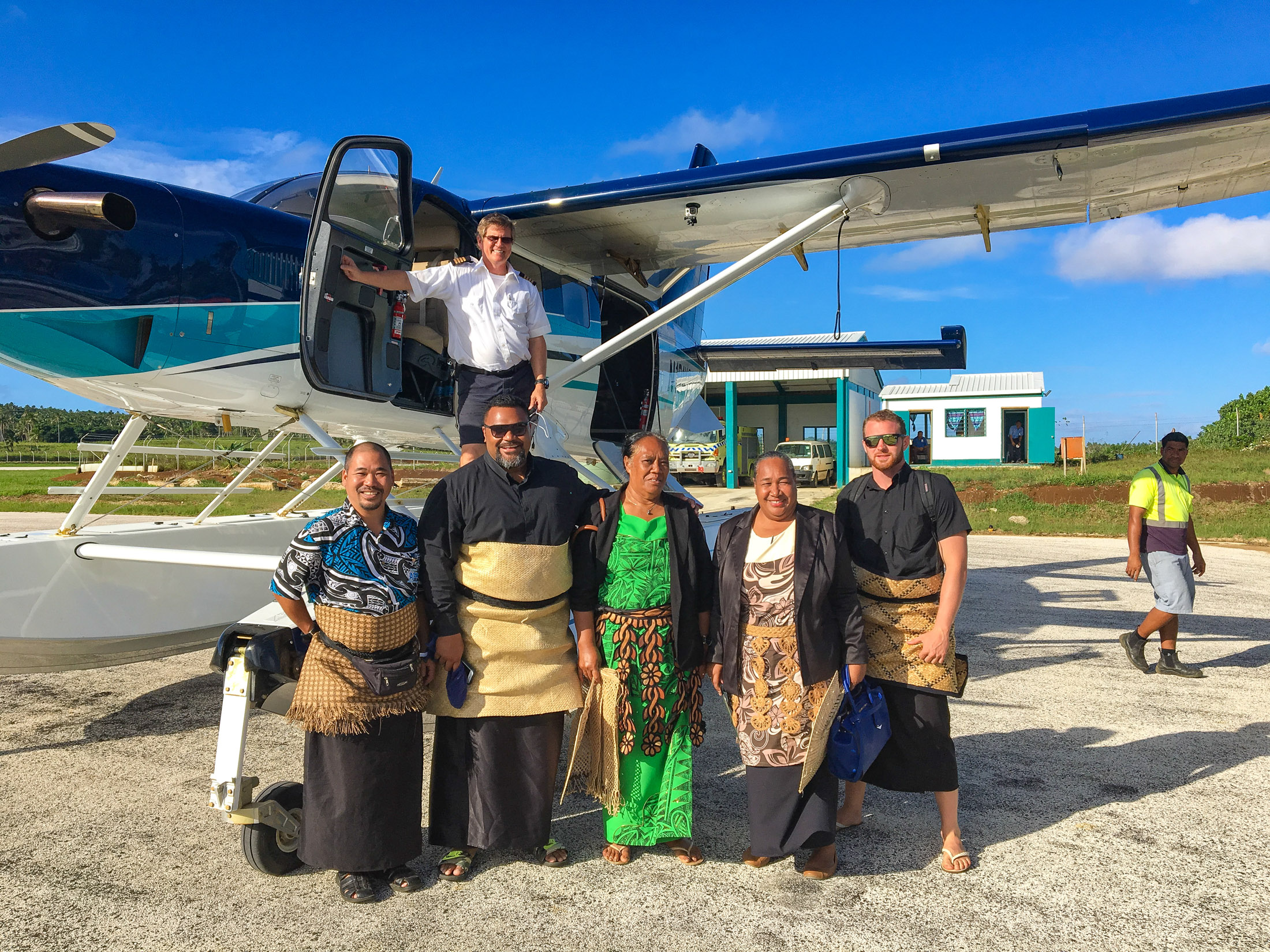
From approval in principle to your first paying passengers.
Entry to Service begins when the civil aviation authority has approved the AOC in principle but requires a demonstration or proving flight, and it ends only after the first successful commercial flights. This path is for companies with their own Accountable Manager. If you would rather hand over day-to-day leadership as well, see On-Site Aviation Management, which includes everything on this page.
The aircraft
These services involve evaluating, selecting, and ferrying aircraft to the host country promptly and cost-effectively:
- Arranging finance and insurance for purchasing or leasing aircraft.
- Identifying and carrying out pre-buy inspections and acceptance flights.
- Organizing ferry flights, de-registering the aircraft in the country of manufacture, and registering it in the country of operations. I have personally ferried amphibians across the North Atlantic and from the Gulf to Europe.
The people
- Arranging work permits and residences for expatriate managers and staff.
- Hiring engineers, pilots, and staff.
- Training — ground school classroom lessons for all staff, including pilots, cabin crew, dispatchers, ramp crew, and customer service — followed by initial operational and safety training, including line training.
- Airport and seaport safety and operational training, so pilots and ground crews know each seaport environment and every base operates safely for staff and customers.
The systems
- Implementing the organizational structure — management safety and financial commitment, policies, controls, programs, the internal audit process, communications, flight following, and emergency response plans.
- Implementing and conducting flight operations, including the proving flights: operations manuals, standard operating procedures, crew standards and scheduling, safety briefings, checklist usage, minimum equipment list compliance, and the accuracy of accident, incident, and near-miss reporting systems.
- Flight operational risk management — procedures built from baseline operational data and careful assessment of incident and safety reports, with risk assessments that ensure staff know every hazard and its consequences.
- Aircraft maintenance and engineering — training, quality control processes, maintenance manuals and programs, planning and scheduling, stores and spares control, ADs and manufacturer modifications, deferred maintenance and MEL compliance, weight and balance controls, and maintenance records.
- Airworthiness risk assessment — ensuring the maintenance department coordinates efficiently with the flight department for on-time performance and regulatory compliance.
- Ramp employee training and standard operating procedures; airport and seaport security protocols.
- Dispatcher training and installation of the tools for booking, scheduling, and dispatching all flights; customer service training and the tools for booking customers and receiving payments.
The COO option
Some clients have an Accountable Manager but want continuity through the fragile first year. In that case, I can stay on as Chief Operating Officer for six months to a year to complete the start-up, keeping the momentum of entry to service while your own management team takes root.
How it ends
Entry to Service ends the way every start-up should: with the first successful commercial flights — on schedule, on budget, and with every system already proven in operation.
→ Alternative: On-Site Aviation Management · Previous: AOC Application and Type Add-Ons