
Route Guides, Manuals, and the Documentation of Safety
Seaports and Waterdromes, Article 7 of 8 | By Captain John Goulet | Goulet Aviation Services
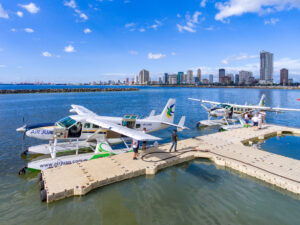
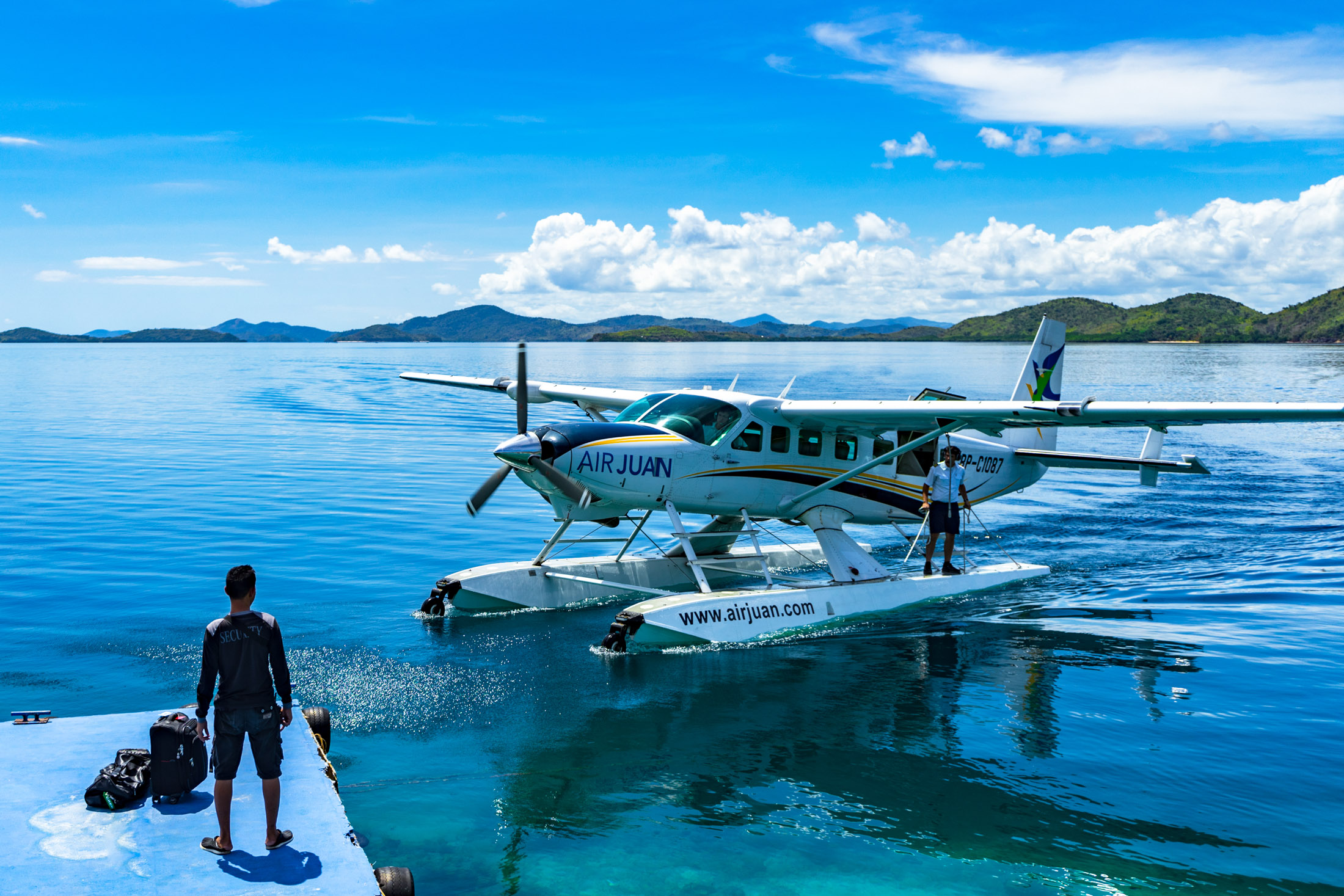
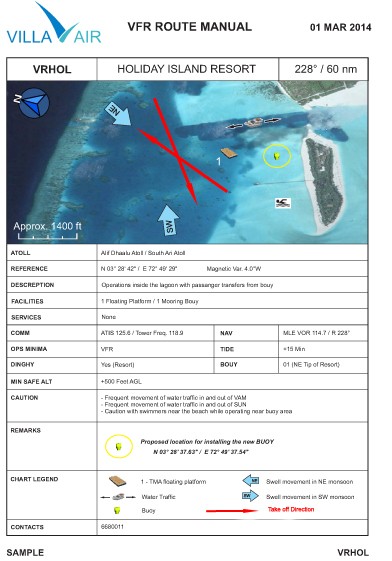
Somewhere in my files is a single page headed RPTSR, Two Seasons Resort, Palawan/Coron. It carries the site’s coordinates, a diagram of the lagoon with the landing area and hazard zones marked, the note that docking is at a plastic floating jetty anchored to shore, the radio frequency for Busuanga on 126.70, the operating minimum of VFR by day with 400 feet, a minimum safe altitude of 2,500 feet over Coron Island, a warning about the jetty’s sharp edges and the anchor ropes off its west end that will happily foul a water rudder, a red-circled area where the snorkelers congregate, and a phone number that answers. A pilot who has never been within a thousand miles of Palawan can brief from that page and arrive as if he had grown up there. That page is a route guide entry and the most important piece of paper in commercial seaplane aviation.
This article is about the documentation that sits beneath everything this series has described: the route guides, aerodrome manuals, and safety management systems, because in this business, knowing what paperwork you need prevents you from drowning in it; paperwork is what keeps you afloat.
Why Seaplanes Run on Paper
Airline pilots operate within a prepared world: airports, airways, approach plates, and briefings, all built to standards set by someone else. Seaplane pilots go where nothing has been prepared, which is the entire commercial point of the aircraft, and so the preparation must travel with the operation. The route guide is that preparation. The companion article on common sense in this series makes the argument in full: judgment that lives in one pilot’s head retires with that pilot, and memory is a dishonest bookkeeper besides. The route guide is judgment written down, audited, and handed to the next pilot in the flight bag, and the regulator who demands one is not generating paperwork; he is asking whether the operation’s knowledge exists anywhere outside the thick skulls of its oldest captains. There is a reason the ICAO guidance puts it bluntly: no water landing site should be treated as an ad hoc spot. It should be planned, documented, and made known.
The Anatomy of a Route Guide
A route guide entry is a mini aerodrome manual for one site, and its format matters as much as its content, because a pilot briefing at five in the morning needs the same information in the same place every time. The template I have carried between countries, and which now anchors this framework, holds ten elements. Site identity first: name, internal code, area, and precise coordinates. Then the type of operation, resort, station, or public waterdrome, so the reader knows the context before the detail. Facilities and services third: whether there is a floating jetty, a mooring buoy like the blue one at the southeast tip of Pangulasian Island, or nothing but a beach and a boat transfer; and whether fuel, ground crew, or amenities are available, with None being a perfectly acceptable and very informative answer. Communications fourth: who to call and on what frequency, the tower you report passing, the company operations channel, or the self-announcing procedure where no service exists.
Then the operating envelope. Minima: VFR by day with the site’s own numbers, which may sit well above the regulatory floor where terrain, obstacles, or traffic demand it; a downtown Nile site deserves higher minima than a remote Red Sea sandbar. Minimum safe altitude for the transit and the hold: 2,500 feet over Coron, 3,500 feet over Palawan, generally 1,000 feet over whatever the terrain dictates, but for day VFR, 500 feet works as well. Approach and docking procedure: the preferred landing direction against the prevailing wind; the instruction to approach from the lee side, close to the reef, where the swell is running from; the beta shutdown, straight in at the floating dock; the requirement for a low reconnaissance pass to clear the area of boats. Cautions, which I consider the heart of the document: the sharp dock edges, the fouling ropes, the red-circled snorkelers, the northeast wind that builds waves down a long fetch while the swell arrives from the northwest, the fishing nets, the coral heads, the birds.
Remarks for the local knowledge that fits nowhere else, the stable jetty, the alternate mooring buoys on the far side of the island, the hotel that would rather not hear a turbine engine before nine am. And contacts last: the dock master, the operations centre, the person who answers when the pilot needs the landing area cleared or a boat sent. If a site has no significant hazards, the guide says so explicitly, because a blank is an unanswered question and a stated None is a completed risk assessment.
From One Page to the Full Manual
Documentation scales with the tier, exactly as the infrastructure did in Article 4 and the oversight did in Article 6. A landing site lives as an entry in the operator’s route guide, approved under the AOC. A seaplane station adds its registration papers and keeps its route guide entry current. A certified waterdrome graduates to a full aerodrome manual in the ICAO sense: the site, facilities, services, and equipment; communication and navigation procedures; operating limitations; rescue and firefighting arrangements; and the management structure that owns them, with the essentials promulgated through the AIP so the information reaches strangers as well as staff. The route guide is not a lesser version of the manual; it is the same discipline at a different scale, and in my experience it is also the seed document. Every certified waterdrome I have helped establish began life as one page in somebody’s route guide, and the certification process was, in large part, the act of growing that page into a manual.
SMS: The System That Reads the Paper
A route guide records what is known. A safety management system is the machinery that keeps it true. Annex 19’s four components translate to the water without strain. Policy is the operator’s standing commitment, the SOPs of Article 5 and the authorities they assign. Risk management is the hazard register, and a seaplane operation’s register is refreshingly concrete: the anchor ropes, the swimmers, the seasonal fetch, the ferry schedule, each with its mitigation written beside it, most of which end up as route guide cautions. Assurance is the honest ledger, the record of every landing, delay, near event, and change at every site, and it exists precisely because pilot memory keeps false statistics; the operator who logs twenty arrivals knows the boat cut him off twice, not every time. Promotion is the mentoring and recurrent training that moves the knowledge into new heads. The Maldives, as we saw in the last article, requires an emergency response plan for every water aerodrome, whether certified or licensed, and allows operators to inspect their own remote sites under SMS, with reports to the authority and a visit every three years. That is documentation doing the work of an inspectorate too large for any budget, and it is the model I recommend to every developing framework.
A World Converging on the Same Answer
What convinces a hesitant regulator is not my template but the company it keeps. The Maldives requires certification of its major water aerodromes and licensing of every platform under MCAR-138, each with documented procedures and audited safety measures. Greece, after years of bureaucratic stall, rewrote its law in 2018 and again in 2020 to create a tiered licensing system with standard documentation for every approved waterway, and dozens of water aerodromes followed. Saudi Arabia, building a Red Sea tourism economy at speed, issued GACAR Part 137 in 2022, a complete water aerodrome regulation drawn heavily from the ICAO APAC guidance, and had the good sense to publish a standardized water aerodrome operations manual template and inspector checklists as appendices, so that every base documents itself the same way and every inspector checks the same things. Four jurisdictions, one conclusion: the document is the regulation’s delivery mechanism. A state that adopts the APAC guidance and mandates the route guide has, at a stroke, a functioning oversight system for a network of sites it may never have the staff to visit.
What This Means for You
For the inspector: ask for the route guide before you ask for anything else, because it tells you in ten minutes whether you are dealing with professionals. Check that every site the operator uses has an entry; that minima, MSA, and cautions are site-specific rather than boilerplate; that the cautions read like local knowledge rather than legal caution; and that the entries carry revision dates, because a route guide that has never been amended is a route guide nobody is using. For the operator: your documentation is a commercial asset, not a compliance cost. It is what makes your next approval faster, your next pilot trainable in weeks instead of months, and your operation sellable, because an operation whose knowledge is written down is worth more than one whose knowledge drives home each night. For the harbour master and port manager: the route guide is where your water gets written into aviation. The ferry schedule, the regatta season, the beach where the swimmers gather, tell the operator, and then ask to see the entry, because your local knowledge belongs in their cautions and their contact list should include you.
Where We Go from Here
There is a satisfying symmetry in where this leaves us. The series began with flying boats that crossed oceans on seamanship and barometers, and it arrives here: a mature, converging, internationally benchmarked system of documents that lets a seaplane operation prove its safety to any authority on Earth. The framework is finished, published, and audited. What it is waiting for, in the final article, is the next generation of aircraft, electric, amphibious, and hull-born, that will inherit it, because for the first time in aviation history the paperwork is ready before the airplanes are.
References
Seaplane landing site route guide content and best practices (ECAA guidance, Goulet Aviation Services consulting work), including the Two Seasons Resort and Pangulasian Resort sample route guides, Palawan, Philippines.
ICAO, Annex 19, Safety Management, and the Manual on Certification of Aerodromes; ICAO Asia Pacific Regional Guidance on Water Aerodromes for Seaplane Operations (aerodrome manual content and AIS promulgation).
Maldives Civil Aviation Regulations MCAR-138 (certification, licensing, emergency response plans, and audit cycles).
Greece, Laws 4568/2018 and 4663/2020 (water aerodrome licensing framework).
Saudi Arabia, GACA, GACAR Part 137 (2022), water aerodromes, including the standardized operations manual template and inspector checklists.
Companion article: Common Sense and Seaplane Flying, Revisited (documented judgment and the memory problem).