
A Century of Confusion Worth Clearing Up.
Ask a harbour master, an aerodrome inspector, and an airline pilot what to call the place where a seaplane meets the water, and you will get three different answers, all of them half right. In fifty years of flying seaplanes as a pilot, instructor, and consultant, I have landed on a certified waterway in the middle of one of the world’s busiest working harbours, tied up at resort docks on remote tropical islands that amounted to a pontoon and a windsock, and shut down beside a yacht at anchor in a hidden Indonesian island bay that appears on no aviation chart anywhere. Same aircraft, same pilot, same water. Legally, those were four different kinds of places, each with a different set of expectations attached.
This article sorts out the vocabulary because it is the foundation for everything else in this series. If you are a civil aviation inspector wondering what standard applies to a dock, a harbour master wondering if a seaplane has the right to be inside your breakwater, a port manager weighing the idea of adding a seaplane terminal adjacent to your container terminal, or an airline pilot trying to reconcile how a stretch of open water reconciles with everything you know about aerodromes, the confusion usually starts with the words. It did not start with us, though. It started a century ago, so that is where we will begin.
Before Runways, There Was Water
Water was the world’s first international runway system. In the 1920s and 1930s, an aircraft that wanted to fly between continents needed a long, flat, obstacle-free landing site, and the only such surfaces available in most of the world were harbours, rivers, and sheltered bays. Every trading nation already had those. The aircraft came to the infrastructure, not the other way around, and the great flying boats were designed to use it. Pan American began with a single route from Key West to Havana in 1927; by 1939 its Clippers were serving some 250 destinations in 55 countries, harbour to harbour, without paving a single runway.
The precedents are everywhere once you look for them. On 22 November 1935, Pan American’s Martin M-130 China Clipper lifted off from San Francisco Bay and arrived in Manila Bay on 29 November, having staged through Honolulu, Midway, Wake, and Guam. Manila had an international air terminal before it had a runway long enough to accommodate an airliner; the terminal was the bay. On 4 August 1938, Rose Bay on Sydney Harbour officially opened as Australia’s first international airport, where Qantas Empire Airways and Imperial Airways Short Empire flying boats began the long haul to Southampton that became the Kangaroo Route.
In Fiji, Laucala Bay at Suva served the great flying boats through the war years and afterwards hosted the Short Solents of Tasman Empire Airways on the famous Coral Route across the South Pacific. Foynes on the Shannon and Botwood in Newfoundland anchored the transatlantic service. And here in Canada, war-surplus Curtiss HS-2L flying boats were working out of rivers and lakes in Quebec as early as 1919, opening up bush country that had never seen a wheel, let alone a runway.
I make this point to every port authority and civil aviation authority I work with, and I will make it to you now: seaplane operations inside working harbours are not a novelty to be invented. They are a precedent to be revived. Most countries with a coastline have a history of flying boats dating to the 1920s, 1930s, and 1940s, and in many cases the very harbour under discussion once handled scheduled international flying boat services. When I propose a waterdrome to a harbour master, I am often reminding the port of something it has already done.
The Runway Changed Everything
Why flying boats and not floatplanes? Seaworthiness. An aircraft crossing oceans had to treat the sea as its alternate, and only a boat hull could do that. The flying boat’s deep V hull displaces water efficiently on landing, its low centre of gravity and long keel keep it stable in swell, and its clean lines waste no power on the drag of struts and spreader bars. The Grumman Albatross was built to operate in Beaufort force 4 conditions with waves of a metre and more, and having flown the Grumman Goose and the PBY, I can tell you those hulls had more in them than the certificates admitted.
Then the Second World War paved the world. Thousands of runways were built across every continent, and every island chain that mattered, and the economic case for the big flying boats collapsed almost overnight. Landplanes were faster, cheaper to build, and easier to maintain, and they no longer needed the water. Within a decade, the great seaports of the era, Sydney, Suva, Ireland, Newfoundland, Miami, New York, San Francisco and the rest, had gone quiet.
What replaced the flying boats on the water was something of a different kind: the converted landplane. The Norseman, Bellanca, de Havilland Beaver, the Otter and Twin Otter, and the Cessna 180 and 185 and later the Caravan were all designed for runways and then mounted on pontoons. They became the backbone of bush aviation, and I have spent a good part of my life flying them, but we should be clear-eyed about the compromise. A floatplane is a landplane standing on two small pontoons held together by struts, wires, and spreader bars. It is awkward in rough water, prone to wallowing and submarining, and inherently less seaworthy than a hull that was designed to be a boat. On Wipline floats, the Twin Otter is the most seaworthy floatplane working today, with the Caravan on 8750s next in line, and neither would care to meet the sea state an Albatross shrugged off.
For seventy years the industry accepted that compromise, because most floatplane flying happens on sheltered lakes, rivers, and harbours where seaworthiness is rarely tested. But as commercial seaplane operations return to coastal waters, island resorts, and open-sea tourism, the hull question is returning with them, and the modern answer looks a great deal like the old one: amphibious flying boats, updated with modern aerodynamics, materials, and computational fluid dynamics. Hold that thought. It is the subject of the final article in this series, on the future of seaports.
Why the Words Matter
ICAO Annex 14 defines an aerodrome as a defined area on land or water, including any buildings, installations, and equipment, intended to be used either wholly or in part for the arrival, departure, and surface movement of aircraft. Read that again: on land or water. In international law, a patch of water used for aircraft operations has always been an aerodrome. There is no separate ICAO annex for seaplanes; there is one definition, and everything else is how each state chooses to apply it.
And the states apply it in different vocabularies, which is where the confusion lives. Transport Canada registers water aerodromes under Subpart 301 of the Canadian Aviation Regulations and publishes them in the Canada Water Aerodrome Supplement. The FAA refers to the same facility as a seaplane base and describes its planning and design in Advisory Circular 150/5395-1B. The ICAO Asia Pacific Regional Office, whose guidance on water aerodromes is the most complete treatment available anywhere, uses water aerodrome as its umbrella term and has published sample regulations that any state can adapt. Newer frameworks, such as those adopted by Greece and Saudi Arabia, and the one I have been involved in developing for Egypt, follow the APAC model and distinguish three tiers of facility, with a fourth term describing a function rather than a place. The words are not interchangeable, because the word determines the certification requirement, the mandatory infrastructure, the inspection regime, the insurance coverage, and whether the site appears in the Aeronautical Information Publication at all.
The Four Terms, Sorted
The seaplane landing site. This is the bottom of the pyramid and the origin of the whole business: a pre-scouted stretch of water with no infrastructure at all, used infrequently, if at all. The seaplane beaches on a sandbar or mud bank, anchors off, transfers passengers to shore by boat, or makes ad hoc use of an existing dock or jetty that was built for vessels. A landing beside a yacht to take on a charter party is a landing site operation. Nothing is published, and nothing is built, but that means something is required. A responsible and experienced operator scouts the site, assesses depths, obstacles, and traffic, and documents the whole thing in the company route guide approved under its air operator certificate. The next pilot to arrive carries the aerodrome in the flight bag.
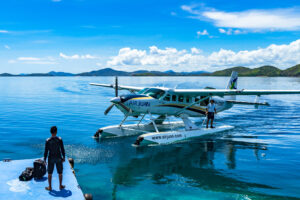
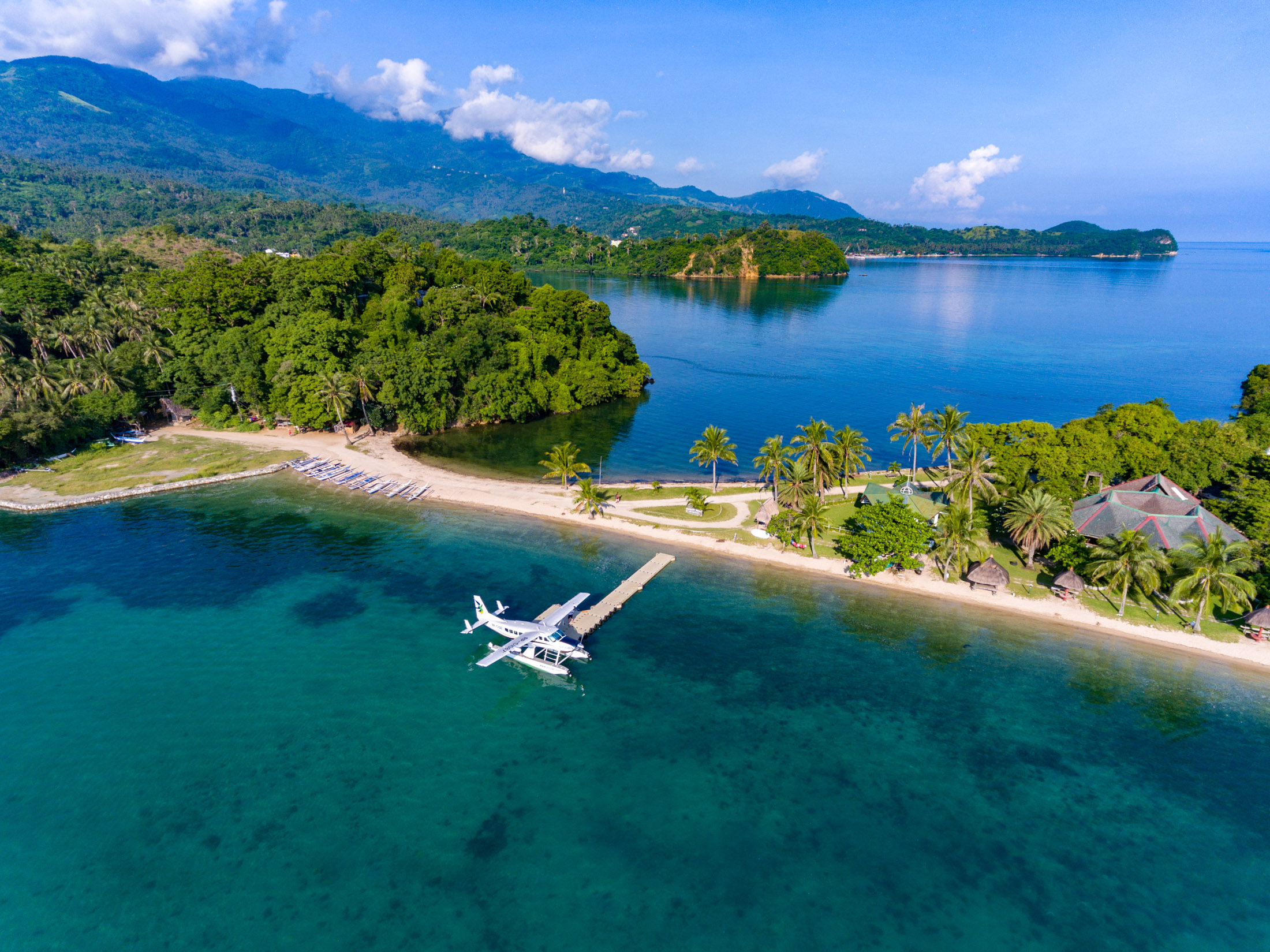
The seaplane station. One step up, and now there is purpose-built seaplane infrastructure: a dock or pontoon for passenger transfers, a windsock, signage to keep the public clear of a turning propeller, and basic safety equipment. A private resort dock is the classic example. What separates a station from a landing site is precisely that infrastructure and the passenger transfer facilities that come with it; what separates it from a waterdrome is scale and regularity. A station is registered with the authority and operates under an approval or a letter of no objection rather than a full aerodrome certificate.
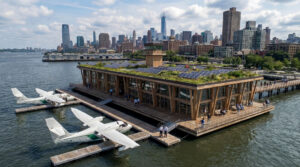
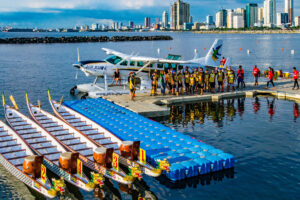
The waterdrome, or water aerodrome. This is the full expression of Annex 14 on water: a defined water operating area, marked with buoys where marine traffic permits, a terminal or passenger shelter, controlled access, trained staff, rescue capability, and a safety management system, certified or registered for regular commercial service and published in the AIP or, in Canada, the Canada Water Aerodrome Supplement. Vancouver Harbour Water Airport, CYHC, with its own control tower and published procedures in the middle of a working port, is the standard I point to. A waterdrome is to a seaplane what a certified airport is to a landplane.
The seaplane base. Here is the term that trips everyone up, partly because the FAA uses it as the umbrella word for everything above. In the taxonomy I use and recommend, a base is not a fourth tier of infrastructure at all. It is a function overlaid on a waterdrome or a station: the place where the seaplanes live. A base is where aircraft moor or haul out overnight, where maintenance occurs, where crews are quartered, and where fuel and dispatch are located. Not every waterdrome is a base, and not every base is a waterdrome. A downtown waterdrome may handle forty scheduled movements a day and host no aircraft after sunset, while a quiet station up an inlet may be home to an entire fleet. When someone tells me they are building a seaplane base, my first question is always the same: is anyone actually based there?
And where does the seaport fit? I use seaport, in the aviation sense, for the destination-grade certified waterdrome integrated into a working harbour alongside the ferries and the shipping, the marine equivalent of a regional airport. The marine world will always reserve seaport for ship ports, so context matters, but the double meaning is older than it looks. In the Clipper era, Manila Bay and Rose Bay were airports with water runways, and nobody found the idea strange. This series is called Seaports and Waterdromes because I believe we are heading back in that direction.
The four terms, side by side:
| Term | Typical infrastructure | Regulatory status | Example |
| Seaplane landing site | None. The seaplane beaches, anchors, or borrows an existing dock or jetty; passengers may transfer by boat. | Pre-scouted and approved under an AOC holder’s protocols and documented in the route guide; not published. | A scouted cove used twice a season; a one-off rendezvous with a dive yacht at anchor. |
| Seaplane station | Dedicated dock or pontoon, windsock, signage, safety equipment, and passenger transfer facilities. | Registered with the authority; approval or letter of no objection rather than a certificate. | A private resort dock in the Maldives or in Muskoka. |
| Waterdrome (water aerodrome) | Defined and marked water operating area, terminal or passenger shelter, trained staff, rescue capability, safety management system. | Certified, or in Canada registered, and published in the AIP or the Canada Water Aerodrome Supplement. | Vancouver Harbour Water Airport (CYHC). |
| Seaplane base | Maintenance, overnight moorage or haul-out, fuel, dispatch, and crew facilities layered onto a waterdrome or station. | A function, not a separate tier; it takes the regulatory status of the site that hosts it. | An operator’s home dock where the fleet sleeps. |
And the same idea in each regulator’s language:
| Authority | Preferred term | Key reference |
| ICAO | Aerodrome (land or water) | Annex 14, Volume I, definition of aerodrome |
| ICAO Asia Pacific Regional Office | Water aerodrome | APAC Regional Guidance on Water Aerodromes for Seaplane Operations; Sample APAC Regulations for Water Aerodromes |
| Transport Canada | Water aerodrome | Aeronautics Act definition of aerodrome; CARs Subpart 301; Canada Water Aerodrome Supplement |
| FAA | Seaplane base | AC 150/5395-1B, Seaplane Bases (2018) |
| ECAA (proposed framework) | Waterdrome, seaplane station, seaplane landing site | Draft regulation of seaplane water aerodromes in Egypt, modelled on the APAC guidance |
A Tale of Three Landings
Let me make the tiers concrete with three landings from my own logbook, or ones very like them. The first is Vancouver Harbour. You arrive under the direction of a control tower dedicated to the water aerodrome, follow published arrival procedures, land in a defined operating area shared by choreography with kayaks, tugs, ferries, and freighters, and taxi to a terminal that would not embarrass a regional airport. Every element is documented, inspected, and published. That is a waterdrome doing its job inside one of the busiest ports in the Americas, and it works because aviation and marine authorities each know exactly where their writ runs.
The second is a seaplane station. There is a windsock luffing on the shore and a floating dock with a staff member waiting at the cleat. I brief the passengers before we touch the water; the dock hand takes a line; the engines are shut down before anyone moves; and the guests step ashore dry between the signs that keep the selfie-takers clear of my propeller. No terminal, no tower, no AIP entry, and none needed, because the procedures scaled to the site are written down and everyone follows them.
The third is a bay with no name on any aviation chart, where a dive yacht lies at anchor with charter guests to collect. Earlier, the site might have been scouted and documented: depths, rocks, prevailing winds, boat traffic, escape paths. If not, an experienced pilot, on the Operations Manager’s authority, is dispatched to carry out the flight and reconnaissance simultaneously. In most cases, the first pilot to carry out the recon was me. I land well clear, taxi in slowly, and the yacht’s tender brings the passengers to the float. To the guests it looks wonderfully casual. It is anything but, and that is precisely the point.
The route guide entry is subsequently approved under the operator’s AOC. All three of these landings were legal and safe, not because they met a single uniform standard, but because a documented framework scaled the standard to the site.
What This Means for You
For the aerodrome inspector: expect and embrace the tiered model. Certification is not the right tool for every dock. Still, documentation is, and the ICAO APAC guidance and its sample regulations give you a ready-made framework so that your authority does not have to invent one from a blank page. The question to ask of any site is not whether it looks like an airport, but whether the operator can show you the route guide, procedures, risk assessment, and safety case that match its tier.
For the harbour master and the port manager: the moment a seaplane is on your water, it is a vessel, subject to the collision regulations and your by-laws, and its pilot should know that better than most boaters do. A professional operator will arrive with written procedures, defined operating areas, and an eagerness to coordinate with your traffic scheme, because Vancouver, Victoria, Cape Town and a century of precedent show that seaplanes and shipping share water well. If a proponent cannot produce that paperwork, you have learned something important about the proponent, not about seaplanes.
For the airline pilot considering the water: the discipline you know translates directly. A waterdrome has defined operating areas, published procedures, and traffic control; a landing site has a survey, a plan, and minima, all of it written down before you commit. The surface moves, and the runway has no centre line painted on it. Still, the difference between a professional operation and an adventure is exactly where it has always been, in the preparation.
Where We Go from Here
Everything in this series builds on the vocabulary we have just established. The next article takes up the question I am asked more than any other, by inspectors and harbour masters alike: when exactly does a seaplane stop being an aircraft and become a vessel, and whose rules apply on the water? From there, we will choose and approve a site, build the dock, run the daily operations, share the harbour, and document the safety case before returning, in the final article, to those seaworthy hulls and the electric, amphibious future they are about to carry. A century ago the world’s harbours were its airports. The regulations, the guidance material, and the operating procedures now exist to make them airports again, and this time we know precisely what to call them.
References
ICAO, Annex 14 to the Convention on International Civil Aviation, Volume I, Aerodrome Design and Operations (definition of aerodrome).
ICAO Asia Pacific Regional Office, Regional Guidance on Requirements for the Design and Operations of Water Aerodromes for Seaplane Operations, and Sample APAC Regulations for Water Aerodromes.
Transport Canada, Canadian Aviation Regulations, Subpart 301 (aerodrome registration); Aeronautics Act, section 3 (definition of aerodrome); NAV CANADA, Canada Water Aerodrome Supplement.
FAA, Advisory Circular 150/5395-1B, Seaplane Bases, 31 August 2018. Historical dates: Pan American Airways China Clipper transpacific inaugural, San Francisco to Manila Bay, 22 to 29 November 1935; Rose Bay Water Airport, Sydney, officially opened 4 August 1938; Laucala Bay, Suva, flying boat operations from the Second World War